Thursday, October 19

Church planting amongst prostitutes

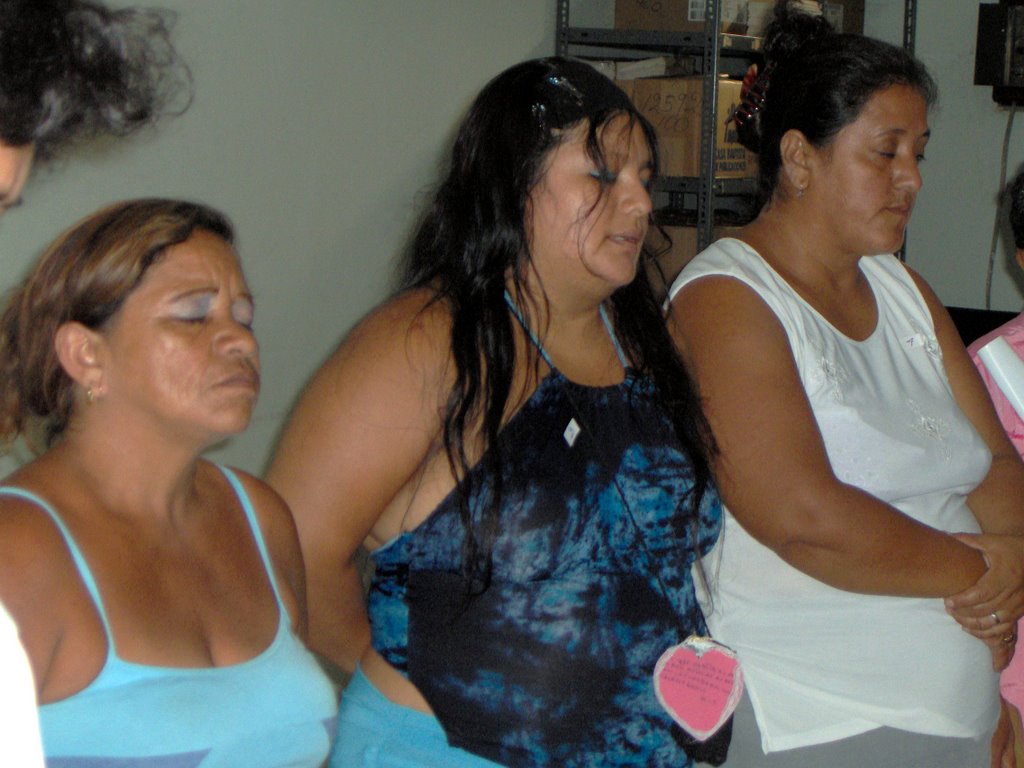
The following comes from fellow team member, Barbara Rivers, who has a wonderful ministry amongst women in prostitution. Thanks for reading what she writes and for praying for her and this ministry...

Miriam had not worked in prostitution for the past 10 months. She was needing a job and was greatly tempted to go back into prostitution. She stated that she was at the point of going back but she prayed and the Lord provided her with a job at a restaurant in the downtown area. The owner is allowing her to take off two hours on Fridays so she can continue her discipleship. The Lord provides for us beyond our expectations!

On October 6, twenty women participated in two conferences in which they were taught what the Scripture says concernng sexual relationships. Twelve committed themselves to the Lord to never work again in prostitution. Pray that they will seek the Lord in times of difficulty as Miriam did.

In the month of October, we have been reaching out to a new group of thirty women working in prostitution and have asked us to pray for them and their family. Please pray for them as we share the gospel! We also want to start reaching out in the southern part of Guayaquil. However, we are in need of more volunteers! Pray that God will send more workers. Three of our volunteer workers have had family situtations in which will not be able to participate for some time. Sonia's elderly mother is to be operated Friday, Oct. 19. Tania gave birth to a healthy little girl and will be out for several months. María Jose needs your prayer for a personal need in the family. With 30 more women open to the gospel, we need workers!

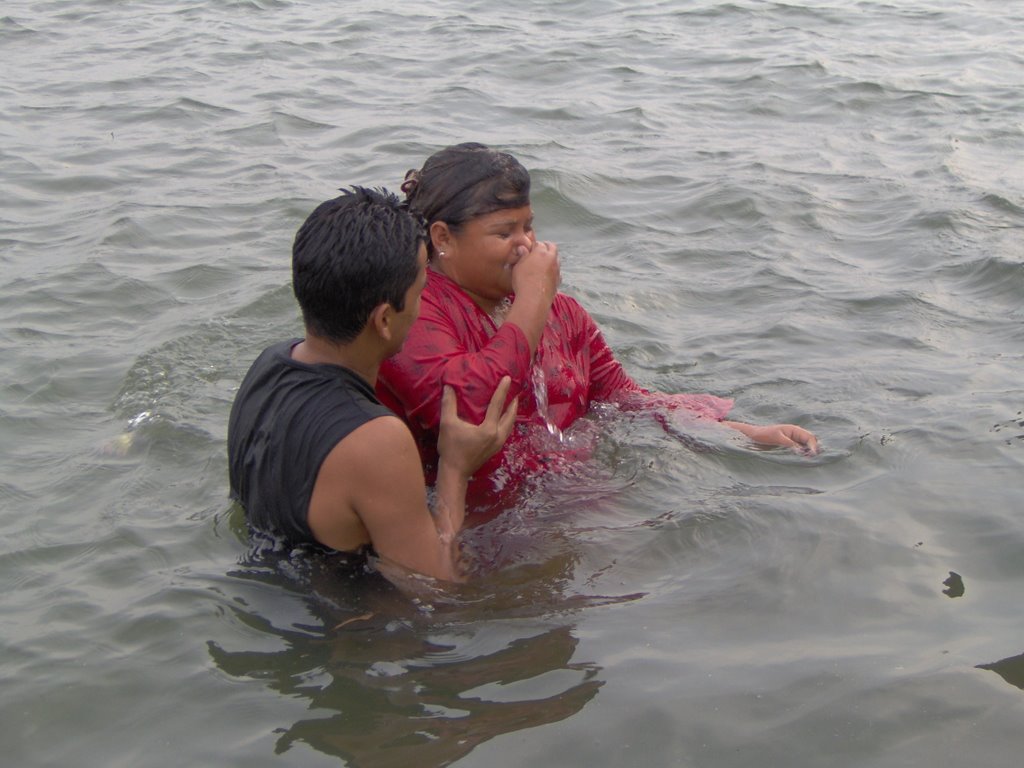
For the year October 1, 2005 to September 30, 2006, 60 women and 30 children attended the weekly discipleship meetings. Nineteen were baptized and 10 are seriously contemplating baptism. Pray that they will obey in believer's baptism.

Thank you for your prayer support!

Monday, October 16

Women church planters

Marty Duren's Women in ministry post this past weekend has generated over 148 comments! Instead of adding one more to this already long list, I have chosen to post my own comments on the subject below...

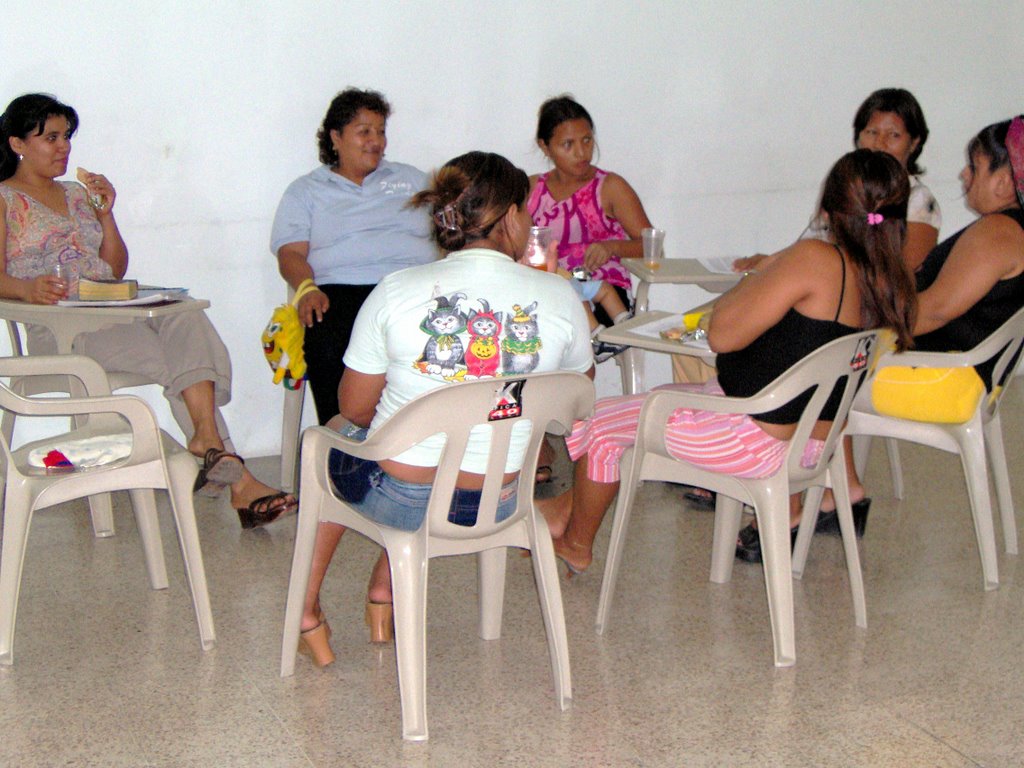
A while back, we had a group of Stateside volunteers who came down to help us plant house churches. Mornings were spent training them in our church planting methodology. Afternoons were spent with experienced national church planters in evangelism, discipleship, ministry, and in intentional church planting. At the end of the week, five new outreach groups were begun, one of these eventually became a church.

After being immersed in the above for a couple of days, one of the Stateside volunteers asked:

"How could you as an IMB missionary sign the BF&M2000 and allow women to be out there planting churches?"

I welcomed the question and we began a dialogue more or less along the following lines...

"Well," I responded, "for starters I didn't read the part in the BF&M where it prohibits women from starting churches..."

The student clarified, "they are teaching and leading churches..."

"Yes", I replied, "and not only that, they are winning new people to the Lord, discipling them and starting new churches. They consider themselves 'ministers of the Gospel' just like you and me..."

"But the BF&M2000 says that only men may be pastors, you have women who are pastoring out there..."

"Very few of the house churches have leaders who are called 'pastors'. Leadership is usually shared amongst several individuals according to their spiritual gifts and talents...being the 'church planter' does not make them the 'pastor'..."

I continued, "In the New Testament we find several roles/functions mentioned: apostles, evangelists, prophets, teachers, shepherds (pastors), servants, etc. At least some of these roles/functions were filled by women like Junia (apostle), Phoebe (servant/deaconess), the four daughters of Philip (prophetesses), Priscilla (missionary/church planter/church worker), Lydia (church leader?), etc."

The volunteer continued to press the issue, "call it what you want, but the office of pastor is limited to men..."

I, of course understood where he was coming from and what his point was, but it was important to me that he understand that there can be a 'church' without the offices of pastor and deacons...

"Can we have a church without having the two offices," I asked?

The volunteer hesitated, "well, I guess, but..."

I continued, "Are offices needed if the church as a whole is covering all the ministry bases: teaching, evangelism, nurturing, exhortation, encouragement, discipleship, worship, etc.? Where in the NT is a church required to have an officially named pastor in order to be a functional NT church?"

I could see that my friend was not thoroughly convinced but we both had other responsibilities to tend to and the conversation ended.

My point?

Eph.4:11-12 talks about apostles, prophets, evangelists, pastors and teachers existing in the church to equip the saints. Equip for what? The work of serving in the Kingdom! For building up the Body of Christ!

In many of the house churches shepherding/leadership is shared amongst several without anyone filling the role of 'the pastor.' Responsibility is mutual amongst ALL the church, not just the pastor. Our team does not have any problem with churches selecting one or more of their own and calling them to be their pastor(s)/elder(s).

But we have noticed a pattern that has emerged within those church plants where they have singled out and called a pastor...

Of the 4-5 house churches we relate to where they did name an official 'pastor', all are struggling right now. Not because they called a pastor, but becuase the church looks to their named pastor as the one primarily responsible for all the work of teaching, leading, evangelism, preaching, etc.

Everyone of these pastors has come to me complaining that they cannot get the church to do the 'work of ministry'. They expect their pastor to do everything (sound familiar?) Quite a number have even left because their 'pastor' was not as dynamic and educated as some of the others around in the more established churches. The work of being the church has been replaced by going to church.

Please hear my heart, we are certainly not against pastors. We believe churches need shepherds, guidance and strong healthy leadership. Our emphasis is on making true disciples and followers of Jesus Christ. We want to see everyone in the church fulfilling their spiritual call to be an active, vibrant part of the Body of Christ. Shepherds are certainly key to helping train and ready the Body for their work in the Kingdom. Every disciple of Jesus is a minister/priest of the Gospel. We try to stay away from anything that would separate us into classes of clergy and laity for the very reasons illustrated above. The only thing that should differentiate us within the Body of Christ are not our 'positions' or 'offices', but simply the various gifts each of us has been given by the Spirit.
Saturday, October 14

Simple church interviews

Jon Dale of House2House has produced an interesting video entitled, "Simple church interviews". I've had the priviledge of meeting and visiting with several of the people featured in this video. I hope you will be as challenged and inspired by what they have to share as I am.

Wednesday, October 11

Who has the authority to baptize?

One of the issues continuing to resurface again and again in Baptist circles is the variance in interpretation of the baptism portion given in the Great Commission. Does baptismal authority rest with individual believers or with a local church congregation?

What was Jesus intent when he gave the Great Commission?

Were his words intended for:

1) the gathered disciples and them alone,
2) the local church throughout the ages, or
3) all disciples of Christ down through the ages?

If your interpretation is #1, then sit back and relax, there is little for you to worry about. It's not your business what God chooses to do with the untold millions who are on their way to an eternity separated from Christ. As strange as it sounds, I have dialogued with many believers who don't like to admit it, but by their actions actually hold to this postion. They feel their responsibility is only to those the Lord brings directly into their life. They have been pacified in their conscience that God only "calls" certain ones of us for this kind of work. They, of course, are not part of this select group.

If the second interpretation is where you find peace, then you believe that every believer is charged by Christ to:

a) go,
b) make disciples,
c) ?
d) teach these new believers.

What happened to "c"? Why is it skipped? Those holding to this position feel that baptism as an ordinance is reserved only for those proper administrators, someone who has been given authority to baptize.

In other words, all of us can do three of the four commands of Christ. But only certain individuals can do all four. Was that Christ's intent when he charged his disciples with carrying out the Great Commission? Did He consider baptism something in a separate class to the other tasks of going, disicipling and teaching? Is it something so special that it can only be administered by a select group of authorized individuals? If so, who are those individuals? How do they get to be the lucky ones to get to obey ALL that Christ said?

Now that may well be the intent of the passage. It certainly seems that many Baptists truly hold this conviction. Fine. But my own reading of this, in combination with other NT baptismal passages, point me to the third option...

I simply feel that the plain reading of the GC lends itself to just what it says: ALL of us followers of Christ who consider ourselves to be His disciples. We are the ones charged with carrying out Jesus' commission.

We are all part of the Body of Christ. There are no individual followers of Christ who have "more authority" than others. Any differences amongst those making up the Body, are functional, not authoritative.

The Spirit has given gifts to each for the building up of the Body of Christ. To begin to elevate persons over others is to go down the road leading to the whole sacerdotal/priestly function like we find entrenched in the Roman Catholic Church. There a clear separation exists between the professional clergy (who have authority), and the laity (who do not.) Clergy are authorized to perform the ceremonies of the church; the laity are not. There we find classes of Christians, distinctions.

In a February 6, 2006 editorial in the Southern Baptist Texan the writer states his conviction for #2 above, "If the commission were given to every believer then any 9-year -old girl who was a Christian could baptize her convert in the backyard swimming pool...Jesus vested the authority to baptize in the church."

At first glance the example seems to prove the argument for church authority in baptism. But isn't there also plenty of room for the literal interpretation of the Matthew 28 passage? Could it be that the reason we have NOT finished the task after 2000 years is that we simply misinterpreted what Christ intended all along?

Imagine with me for a moment the following scenerio...

What would happen if every Dick, Jane, Bill and Harry were to get it into their heads that, yes, THEY are responsible for the Great Commission? Not just a select chosen few, but ALL of us! Like Peter, James, and John, we too have been vested with authority by Jesus Christ himself (Matt.28:18). It is for us to fulfill--not part--but ALL of the Great Commission! I dare say, we would be far closer to finishing the task than we are today.

Monday, October 9

Street church

You've heard of high church...traditional church...cell church...house church...simple church? How about street church?

Last night I attended what I guess was my first street church. It was at Cesar and Gloria's house, two people we have grown to love and appreciate over the past year of working with them and Byron. The only problem was that their house is tiny and no way for the 30+ people to all fit inside--hence they meet out on the sidewalk. All on the edge of a busy 4-lane city street!

When we arrived at 5:30 they were just setting up plastic chairs on the sidewalk. Cars, buses and people were rushing by. The noise level was incredibly high and distracting. I kept wondering how do they have "church" in this kind of environment? Well that is their environment, their world. They live in a constant state of noise and have learned to live their lives without becoming distracted by what is, to me, a high noise level.

Once I began to get over the noise I was introduced to a new believer, Jessenia, who was just baptized a week ago. While waiting for things to get started, I asked her to share with me how she came to know the Lord. With a big smile on her face she related to me that she had had a dream where a beautiful Jesus was calling out to her and saying "come to me..." She awoke and gave her heart to Jesus overwhelmed by the love she had sensed in her dream. I have long ago stopped trying to figure out the mysteries of God's dealings with a world He loves so much. It seems He refuses to fit inside all the little boxes I want to put Him in!

By then a sufficient number of youth had gathered to be able to start. Right as we were cranking up, a gang of 7-8 rough-looking youth walked through the middle of our meeting. The hairs on my head stood up thinking we would certainly be held up, but they apparently had better things to do than hold up a church meeting. Thankfully, they moved on without incidence.

Two large speakers were set up in a window and loud music began to pour out of them. This is what we sang along with. Believe me, we were louder than the street noise! With the music cranked up and our "off key" singing, it was enough to attract the attention of several bystanders hanging around. Talk about a seeker-sensitive service--this defines the term!

Next in the "order of worship" was a choreographed dance by four of the youth to some loud rap music. (I honestly never understood a word so don't know if it was Christian rap or secular rap, but it certainly got the attention of all the folks passing by on the street!

By then several more youth had arrived, one of them a friend who has recently given birth to their first child. She was a precious baby and church stopped for a few minutes while we sat around and chatted and everyone went on and on about the baby. I was asked for advise on what name they should give the baby saying they had pretty much decided on Naomi but wanted a second Biblical name as well (that's what we missionaries do--help people figure out good Biblical names for their kids!)

Next was a drama about two youth; one who hears God's call on his life and the other who doesn't. Both youth get murdered in the drama, but one goes to Heaven and the other to Hell. They were quite graphic about the horrors of the poor guy that got sent to hell. I have to admit the play was quite effective. It was also accompanied by loud rap music that told the story of the two murdered youth.

One would expect a Bible study or something vaguely "spiritual" after all that the had preceeded. Instead we played three silly games. People were laughing so hard and even the bystanders were getting in on the games and enjoying the fun. I couldn't help but think to myself, shouldn't church always be this fun? I bet Jesus was having as much fun in church as we were!

After the games there was a bit of disorder and confusion as people had to go to the bathroom, get drinks of water, nurse baby Naomi, etc. but Byron soon got us back on track by handing out to everyone present a xerox copy of "how to give your testimony." I was amused that even the bystanders were given copies and encouraged to participate in this as well. Byron explained from Acts 1:8 that we are to be WITNESSES in our Jerusalem, Judea, Samaria, and uttermost parts of the earth. He took about ten minutes to work us through the study. Not a person stirred the entire time, they were totally concentrated on "getting it right." After explanations of how to give your testimony, Byron assigned everyone a partner to practice with.

The Lord moved mightily amongst us and there were many people shedding tears at recalling the life they had been saved from. The street noise was louder than ever but there was a holy hush amongst the Body of believers gathered under the stars. The brother next to me broke the "hush" by reporting that he had just led Jorge to the Lord with his testimony. Cheering, clapping and whistling ensued as everyone congratulated their new brother in Christ!

Byron asked if anyone else had received Christ. Ramon raised his hand and said he wasn't yet ready to do so but that he had many problems and would we pray for him? From there we went into a time of praise singing (finally some "real church" going on! :-) After singing and heart-felt worship, they had a noisy-chaotic time of announcements and took up the evenings offering. I was given $20 that the church had been saving up for several weeks to give to an Ecuadorian single missionary sister serving in India.

Church finally broke up after more than two and one-half hours, but not before everyone enjoyed a refreshing glass of soft-drink. Most people continued to hang around and visit, but I went on home.

There is so much about last night that I could comment on. I think what impacted me the most was that what was done was so authentic. It was real. Genuine. Nobody putting on a show, but just being their real selves before a God that they love in the only envirmonment that have ever known. Several times during the evening I thought about Jesus words in John 4 where he says, "the true worshippers will worship the Father in spirit and truth." What I saw last night in this "street church" was this very thing.

P.S. Today is October 9, Guayaquil Independence Day! Read all about it at my wife's blog here. This is really an interesting read. Check it out!

Thursday, October 5

Working together is slower than working alone

This week we turned in our mid-year statistics that measure numbers of new church plants, total churches, baptisms, outreach groups, people being discipled, etc. Many of us frown on such number counting, even though the Bible is full of numbers like the feeding of the 5000, the 3000 added to the church in Acts 2, or an entire book of the Bible named "Numbers".

Are goals and number counting something unspiritual, displeasing to God? True, it got King David in trouble in 2 Samuel 24, and yet in John 15, Jesus himself says, "My Father is glorified by this, that you bear much fruit, and so prove to be My disciples." (emphasis mine)

I usually am for numbers when ours are pretty good (as measured with our peers), but tend to be against them when our stats are poor.

The reason so many of us do not like statistics is that they are often revealing of the little fruit that actually occurs from all our efforts. It is painful to see in black and white that we are not accomplishing all that we would hope for the Kingdom in terms of those tracked church planting indicators.

This year our stats are down and we are not happy with what we had to report. As I reflect upon what has taken place this calendar year I have asked myself what we have done so differently that has resulted in the downturn? Much of it can be attributed to some of the reasons listed below in our, "Why do so many of our church plants fail?" However, one of the reasons not listed in this post but is something that we are trying to do differently than in the past is to DO THINGS TOGETHER.

Charles Ringma has some good thoughts about this in his classic devotional, "Dare to Journey With Henry Nouwen." When we work together with our fellow brethren it is never an easy road to travel. I find it is a much slower process requiring greater patience and understanding on my part. For example, I assigned a task six weeks ago to a fellow team member that would normally have taken me a morning to complete. By assigning it to someone else, we have been delayed in moving forward with a project and still waiting for the needed work to be turned in. That is the difference between working together, rather than working alone. Instead of going at my own pace getting much done, we take on the pace of our fellow brethren. When I work alone I can be much more efficient, but it becomes "my work" rather than "our work."

Nouwen puts it this way, "a slow job done together is better than a fast job done alone." Ringma adds, "This kind of service does not have a quick end result in view. It has a process in view." It is so much easier doing things for others, but as Ringma points out, "...service takes on its true character when we do things with others..."

Yes, it has been a frustrating year in regards to seeing the longed for abundant harvest we had hoped to see this year. At best this will end up being a mediocre year (unless the Lord surprises us all!) in terms of seeing visible fruit from our labors.

Yet, somehow I find myself at peace. This peace comes from knowing that we are attempting to not make a name for ourselves, but are truly wanting to work TOGETHER to see His Kingdom come and His Will be done here in Guayaquil as it is in Heaven.

Tuesday, October 3

Pouring oil on the process

DISCLAIMER: Since I am going to talk about money in this post, I'd like to say upfront that it is not my intention to use this post as a cloak to secretly petition funds for our work and ministry (as much as I would like to! :-). If anyone should write me back privately saying they would like to give to our work or any ministry illustrated below, I will write back instructions on how to make a donation to the IMB, or how to give to the Lottie Moon Christmas Offering, the Southern Baptist annual offering taken up for international missions. As IMB missionaries we encourage individuals to give through their local churches to the Cooperative Program and Lottie Moon Christmas Offering.

In Wolfgang Simson's "Houses That Change the World" he says...
I believe we have moved from a colonial era of mission into what I call 'national mission', where each nation is called to develop its own models of church. Often enough this will have to happen through people in every nation praying for themselves, shedding their own tears, incarnating the living Christ afresh within their own time and culture. If the West could then come and, in the spirit of 'crucified colonialism'--the opposite of imperialism and denominationalism--carefully pour some oil on this process, it would be wonderful.
How, exactly, is one to "carefully pour some oil on this process?"

There is little doubt that countries like the USA and other developed Western nations have indeed been blessed by God. If we are truly One Body in Christ, shouldn't those parts of the Body who have more be willing to share liberally with those who have far less?

The first Wednesday we were back in the States for our last furlough, the church who was hosting us had its monthly business meeting. With no discussion and in just a few minutes more than $75,000 was voted on to 1) replace the windows in the West Wing, 2) repairs to the elevator, 3) an additional room added on to one of the church properties. I realize we were probably the only people present that went into shock that evening over what was to us totally unnecessary expenditures. I couldn't help but think, in less than 15-minutes, more was spent on building maintenance than the entire yearly ministry budget for the combined IMB missionary force in the country where we serve!

But before we are too quick to judge and criticize what was done that evening, would it have been a good thing if the church had voted to designate that same amount to the work in Ecuador? Would we have used it any wiser? Would that amount of money been detrimental to the work by causing dependency? Of course we would like to think we could put the funds to much better use. But, this gets us back to the real question I'd like to struggle with a bit...

How might the West carefully pour some oil on the missions process so that it results in blessing and genuine Kingdom expansion?

1) Giving to the needs of the saints. In Acts and the Epistles we see this kind of sacrificial, liberal giving for fellow brethren going through hard times. The USA, and particularly the Church, has always been at the top of the list to help during a crisis both at home and around the world. I recently sent out a "Prayer SOS" with the intent of illiciting prayer support for some of our fellow believers going through difficult trials. Many people responded by praying and God has been at work in each of these situations. A few actually sent us love offerings to help these saints going through difficult moments. While this was certainly not our intent in sharing these needs, some felt led of the Lord to give and we helped channel these gifts for them. These offerings have been a tremendous blessing to the saints who were recipients. Being one-time gifts they do not create dependency; rather they have been the cause of much thanksgiving to the Father.

2) Matching what can be raised locally for various and sundry evangelistic and outreach projects. It is a terrible thing leading to dependency to simply provide the financial assistance to nationals and pay for everything. They will certainly let you do it, but it takes the blessing away from them of having to give from their own resources. An example of this is something we are currently dealing with. There is a particular discipleship course of study that we would like to use with the new believers. The price per book is $6. Few can afford this amount and if we charge $6/book very few will receive the benefit of this wonderful material. $3 is something that most could pay out over several weeks. They would cherish "their" book that they had bought. But someone has to pick up the remaining $3. This to me, is where a "bit of oil" from the outside might quietly be used to subsidize the cost of making disciples.

3) Independent, self-supporting ministries. Just as in the USA there are many charities and ministries that seek donors, overseas ministries likewise are in desperate need of financial support. I personally do not see the difference between a USA-based ministry asking for contributions and an international ministry doing so. Why is it OK to give to Focus on the Family (a great worthy ministry) but not Teleamigo (see below) or Camino de Salida, Dorcas, Clemencia, or any one of dozens of other struggling national ministries making a tremendous impact on the lives of tens of thousands of people and doing so on a shoe-string budget?

The Teleamigo ministry highlighed in the video below this post is a good example. If you watched this video and saw all the praying going on, you might be surprised to learn that this past month they didn't have the money to pay their office rent, lights were cut off due to not being able to pay the light bill, and the telephone lines were cut off for the same reason. Some might say if they were in God's will He would take care of these needs and provide. Just look at all the millionaire ministries Stateside, isn't the fact that they are so blessed proof they are in God's will? Another way to look at this though is to understand that ministries like Teleamigo are indeed part of God's will, but God's people are often led (seduced?) to donate to ministries and causes that benefit them personally (eg. mega-church buildings, family life centers, favorite Christian television networks, etc.) Having lots of money does not equate God's blessing.

God's blessing has been on Teleamigo through the years, but this does not mean we have not suffered tremendously on the financial end of things. Might this be one of those situations where a bit of western oil poured on the process be beneficial? Teleamigo is only one of many ministries doing a wonderful job. All of them, without exception, are crying out daily to God for financial help to get through one more day. Why can't a bit of the abundance elsewhere be poured out to assist these wonderful ministries?

Any other ideas as to how oil might be poured upon international missions in such a way that it doesn't cause harm, but results in Kingdom growth and blessing to thousands?

Friday, September 29

Building a Foundation on Prayer

Several weeks ago I posted a story about the Teleamigo Ministry here in Guayaquil, a modern day 'Five Loaves and Two Fishes' story.

I invite you to view and hear some of the people we work with and see some of what God is doing in our midst through this ministry. This 3:22 minute IMB video is entitled, "Building a Foundation on Prayer" and was uploaded to YouTube with permission.


Hopefully the video will inspire you to pray more for us. As the title implies, PRAYER is the foundation of everything we do.

If you'd like to join our prayer team send a blank email to either GuayasMestizoTeam-subscribe@yahoogroups.com or muse-prayerlist-subscribe@yahoogroups.com. I also point your attention to the right side-bar where you can click on Muse PrayerNewsletter and Guayas Mestizo Team.