Here are some ways to pray for yourself so that you're praying in sync with the way God works.
1. For the desire of my heart to be toward God and his Word.
Incline my heart to Your testimonies and not to gain. (Psalm 119:36)
2. For the eyes of my heart to be opened.
Open my eyes, that I may behold wonderful things from Your law. (Psalm 119:18)
3. For my heart to be enlightened with these “wonders.”
[I pray] that the eyes of your heart may be enlightened. (Ephesians 1:18)
4. For my heart to be united, not divided, for God.
O Lord, I will walk in Your truth; unite my heart to fear Your name. (Psalm 86:11)
5. For my heart to be satisfied with God and not with the world.
O satisfy us in the morning with Your steadfast love, that we may rejoice and be glad all our days. (Psalm 90:14)
6. For strength in this joy, and endurance during the dark seasons.
[I pray that God] would grant you, according to the riches of His glory, to be strengthened with power through His Spirit in the inner man. (Ephesians 3:16)
7. For visible good deeds and works of love to others.
[I pray that you] will walk in a manner worthy of the Lord...bearing fruit in every good work. (Colossians 1:10)
8. For God to be glorified.
Hallowed be thy name. (Matthew 6:9)
9. In Jesus’ name.
He who did not spare his own Son but gave him up for us all, will he not also give us all things with him? (Romans 8:32)
Thursday, December 30


Monday, December 27
No Graven Image
 Years ago, I read Elisabeth Elliot's only published work of fiction, No Graven Image. A novel with some hard things to say about missionary motives and the way we measure ministry success. I can see now why the book was never a Best Seller. In fact, as I recall, it was not received well when first published in 1966--especially amongst the, then, large missionary population here in Ecuador. The reason? We prefer to hear inspirational missionary success stories and not the real day-after-day plodding of mostly unfruitful labor.
Last week, I reread this no-nonsense fictional missionary story taking place in Ecuador less than a four-hour drive from where I sit typing. "No Graven Image" is an unusual missionary story in that it is NOT an inspirational read. Blogger Loraena describes the novel as, "a book about submission to God's sovereign hand, even when life doesn't happen the way we expect." Her own excellent review can be read here.
Margaret Sparhawk is the fictional missionary working amongst the highland Quichua of Ecuador. As she settles in to her long-prepared for ministry, Margaret shares common struggles many missionaries encounter in their day-to-day life...
It was surprising how many days I managed to spend getting settled. It seemed that each day was full of little things that could not wait. I could not begin my work until my living routine was established and my house in order, and although I awoke each morning with the thought of going to visit Indian homes, each evening came before the thing was done. During the day I felt triumphant to see the time passing in useful ways, conscious that I was not sitting down and wasting time, but when evening came and I took stock of the day's accomplishments I felt guilty to see that no breach had yet been made in heathenism. Hudson Taylor had made an impact on China, Mary Slessor on Calabar, John Paton on the South Sea Islands, David Livingstone on darkest Africa. Just exactly how had they begun? It was strange to find the actual daily doing of missionary work so unspecific, so lacking in direction. "Margaret Sparhawk is working among mountain Quichuas." I could not get away from the image I knew I had projected at home, but here was the other side of the coin. "Working." What does she do? Missionaries wrote of "doing" visitation, of "reaching" people, of "witnessing." I did not need to read any more missionary books, prayer letters, or progress reports in magazines to learn the terminology. I needed to find out what was really basic in the operation..." p.58-59
No Graven Image is, of course, referencing the 2nd Commandment in Exodus 20:4-5,
"Thou shalt not make unto thee any graven image, or any likeness of any thing that is in heaven above, or that is in the earth beneath, or that is in the water under the earth: Thou shalt not bow down thyself to them, nor serve them: for I the LORD thy God am a jealous God, visiting the iniquity of the fathers upon the children unto the third and fourth generation of them that hate me..."
Strange as it may seem, this passage isn't alluded to at all in the book. As Loraena's own review explains,
Unexpectedly, the graven images in this story are the ones that exist in the heart of the Christian, not the pagan. The book's message is this: as Christians, we engrave in our minds, images of what we think it means to serve God - a picture of ourselves doing a good thing - and that is idolatry. We need God's grace to help us see ourselves as we truly are and worship the God who calls us. As Margaret says in the book, The Indians had become people to me - the were no longer my "field". While I had once declared them to be my equals, I now regarded myself as theirs. Instead of saying, "Oh, you are as good as I - let me help you," I now said, "I am as poor as you. God help us all."
Though we openly acknowledge this commandment, we continue to fashion God in our own image. We know what He should be doing, how He should do it, when things should begin to happen, and even presume Him to fit into our theological "God boxes." When He doesn't, then we have a way of explaining things in such a way so that He does fit our graven images of Him.
This in a nutshell is Elisabeth Elliot's point for missionaries laboring away in the "fields of the Lord"...God is God. He will not be conformed to any of our expectations. He is the Potter; we the clay. The clay doesn't tell the Potter what He should or should not do. God will be glorified with, or without us. He is Sovereign. He does not need our permission to act, or have to explain himself to us.
While a bit harsh for those of us who might be tempted to think we are "sacrificing our all for Jesus" it is nonetheless a needed wake-up call. I often find myself confused with God. After all, I am doing my part, shouldn't He be doing His?
I strongly recommend this book to anyone who is out there "serving the Lord" and especially to my missionary colleagues. Somewhere along the way, we have all grown accustomed to hearing only the inspirational and successful missions stories. A lot more goes on in real life than what gets printed and told by the media. "No Graven Image" is the other side of missions rarely told.
Thursday, December 23
Unto the least of these

 |
| "Pedro" |
Last year Pedro was tending his mango trees when a poisonous snake bit him. His 10-year old son found him dead by the side of a tree. Pedro went to be with the Lord, leaving behind his wife Clara* and nine children. Such a tragedy. Of all the people who might have been bitten by a snake and die, why did it have to be Pedro?
 |
| Pedro & Clara w/7 of their 9 children |
Here is someone who has every right to be asking for help and receiving it. Yet she was not asking for herself or for her children. Clara was thinking of all those other children in her community who would have nothing unless she did something about it.
 |
| Children playing in the Bulubulu River |
Clara has understood the words of Jesus, 'Truly I say to you, to the extent that you did it to one of these brothers of Mine, even the least of them, you did it to Me.' When we think of others first above ourselves, we have done it unto Him. Isn't that what Christ did for us at Christmas? His first thought was not for himself. He willingly chose to leave Heaven, come to earth, and give his life so that we might have life.
MERRY CHRISTMAS!
*not real name
Monday, December 20
If the world were a village of 1000 people
--Taken from research done by Dona Meadows. The information has been updated over the years, but the numbers remain close to the original 1990 publication.
If the world were a village of 1,000 people, it would include:
· 584 Asians
· 124 Africans
· 95 East and West Europeans
· 84 Latin Americans
· 55 Soviets (includes Lithuanians, Latvians, Estonians & others)
· 52 North Americans
· 6 Australians and New Zealanders
The people of the village have considerable difficulty in communicating:
· 165 people speak Mandarin
· 86 English
· 83 Hindi/Urdu
· 64 Spanish
· 58 Russian
· 37 Arabic
That list accounts for the mother tongues of only half the villagers. The other half speak (in descending order of frequency) Bengali, Portuguese, Indonesian, Japanese, German, French and 200 other languages.
In this village of 1,000 there are:
· 329 Christians (187 Catholics, 84 Protestants, 31 Orthodox)
· 178 Moslems
· 167 "non-religious"
· 132 Hindus
· 60 Buddhists
· 45 atheists
· 3 Jews
· 86 all other religions
* One-third (330) of the 1,000 people in the world village are children and only 60 are over the age of 65. Half the children are immunized against preventable infectious diseases such as measles and polio. The other half are not.
* This year 28 babies will be born. Ten people will die, 3 of them for lack of food, 1 from cancer, 2 of the deaths are of babies born within the year. One person of the 1,000 is infected with the HIV virus; that person most likely has not yet developed a full-blown case of AIDS.
* With the 28 births and 10 deaths, the population of the village next year will be 1,018.
* In this 1,000-person community, 200 people receive 75 percent of the income; another 200 receive only 2 percent of the income.
* Only 70 people of the 1,000 own an automobile (although some of the 70 own more than one automobile).
* About one-third have access to clean, safe drinking water.
* Of the 670 adults in the village, half are illiterate.
In the village of 1,000 people, there are:
· 5 soldiers
· 7 teachers
· 1 doctor
· 3 refugees driven from home by war or drought
The village has a total budget each year, public and private, of over $3 million - $3,000 per person if it is distributed evenly (which it isn't).
Of the total $3 million:
· $181,000 goes to weapons and warfare
· $159,000 for education
· $132,000 for health care
The Miniature Earth: 2010 Official Version...
What do all of these numbers mean? What do they represent in terms of the Great Commission and global missions?
If the world were a village of 1,000 people, it would include:
· 584 Asians
· 124 Africans
· 95 East and West Europeans
· 84 Latin Americans
· 55 Soviets (includes Lithuanians, Latvians, Estonians & others)
· 52 North Americans
· 6 Australians and New Zealanders
The people of the village have considerable difficulty in communicating:
· 165 people speak Mandarin
· 86 English
· 83 Hindi/Urdu
· 64 Spanish
· 58 Russian
· 37 Arabic
That list accounts for the mother tongues of only half the villagers. The other half speak (in descending order of frequency) Bengali, Portuguese, Indonesian, Japanese, German, French and 200 other languages.
In this village of 1,000 there are:
· 329 Christians (187 Catholics, 84 Protestants, 31 Orthodox)
· 178 Moslems
· 167 "non-religious"
· 132 Hindus
· 60 Buddhists
· 45 atheists
· 3 Jews
· 86 all other religions
* One-third (330) of the 1,000 people in the world village are children and only 60 are over the age of 65. Half the children are immunized against preventable infectious diseases such as measles and polio. The other half are not.
* This year 28 babies will be born. Ten people will die, 3 of them for lack of food, 1 from cancer, 2 of the deaths are of babies born within the year. One person of the 1,000 is infected with the HIV virus; that person most likely has not yet developed a full-blown case of AIDS.
* With the 28 births and 10 deaths, the population of the village next year will be 1,018.
* In this 1,000-person community, 200 people receive 75 percent of the income; another 200 receive only 2 percent of the income.
* Only 70 people of the 1,000 own an automobile (although some of the 70 own more than one automobile).
* About one-third have access to clean, safe drinking water.
* Of the 670 adults in the village, half are illiterate.
In the village of 1,000 people, there are:
· 5 soldiers
· 7 teachers
· 1 doctor
· 3 refugees driven from home by war or drought
The village has a total budget each year, public and private, of over $3 million - $3,000 per person if it is distributed evenly (which it isn't).
Of the total $3 million:
· $181,000 goes to weapons and warfare
· $159,000 for education
· $132,000 for health care
The Miniature Earth: 2010 Official Version...
What do all of these numbers mean? What do they represent in terms of the Great Commission and global missions?
Saturday, December 18
Do you know how much the average Baptist gives to global missions per year?
 Every year Southern Baptist Churches in the United States collect a special offering in December for international missions. 100% of this offering goes for overseas work. The goal this year for the Lottie Moon Christmas Offering is $175 million.
Since we see first-hand and experience the impact of this offering, I would like to say THANK YOU for giving to the Lottie Moon Christmas Offering.
Do you know how much the average Southern Baptist gives to international missions per year? $8.35!!!
Here are a few suggestions that you might consider this Christmas Season as you determine what amount to give. Most of what follows are things we have tried over the years or personally practice as a family.
1) Decide what amount of money you will spend on your family this Christmas and give MORE than this amount to the LMCO. After all, it is Christ's birthday we are celebrating. Should we be getting more than He if it is his birthday?
2) Something we have done as a family for many years now is set aside an amount out of our monthly paycheck and have that amount automatically credited to the LMCO. This took a couple of email and phone calls to set up, but we haven't had to fool with it since, and are able to give to LMCO throughout the year.
3) A variation on the idea above would be to have a LMCO gift box that you deposit a set amount every week/month throughout the year. Then give this amount to your church when the offering is collected in December.
4) Sell tickets to a mother-daughter or father-son breakfast or brunch. Invite a missionary as a guest speaker. Proceeds go to Lottie Moon.
5) Auction students to church members for a day of service, from cleaning house to raking leaves. Money members give for the work youth do goes to Lottie Moon.
6) One idea we have had fun with is hold an auction where a volunteer team brings in "goodies" from the States and auctions them off to the highest bidder. A six-pack of Dr. Pepper went for $120 one year! My son paid $60 for a box of Double-Bubble gum. I myself have paid $35 for a jar of Jiff peanut butter! All proceeds go to the missions offerings. Might your church or group do something similar?
7) Challenge folks to save money for the offering by giving up something small. Examples include a fast-food meal a week or a movie a month. Host a special ceremony for everyone to give their offering and share what God taught them through their sacrifice.
8) Double (or triple!) whatever you gave last year. Give sacrificially, not what is convenient.
9) As a church body, decide to channel funds to a lost world instead of to building improvements or beautification projects.
10) Try out some of the ideas and resources made available at the IMB website.
Whatever you decide to give, please do so beforehand in prayer. The idea of just reaching in your pocket and giving whatever comes out doesn't seem worthy of the King of Kings and Lord of Lords. Give thoughtfully, prayerfully. There are few offerings that make as much of an eternal impact on the world as the Lottie Moon Christmas Offering. Is $8.35 really all we can come up with in a year so that the world may know Him?
How much will you give this year to see souls around the globe come to the Savior?
You can give online here or checks can be mailed (gifts are tax-deductable) to:
Lottie Moon Christmas Offering
International Mission Board, SBC
P.O. Box 6767
Richmond, VA 23230
Lottie Moon Christmas Offering
International Mission Board, SBC
P.O. Box 6767
Richmond, VA 23230
Thursday, December 16
Reflections on our recent trip to Asia
November 8-21 of this year, eight of us traveled from Guayaquil to a major Islamic country in Asia. We had several specific objectives for the trip, all of which were accomplished, but not at liberty to openly share (though I'd love to!) It was truly one of the most rewarding and eye-opening trips that I have experienced.
What instigated the investigative/vision trip was a conviction that after 60 years of Baptist work and 100 years of evangelical work in Ecuador, between 5-7% of the Ecuadorian population profess to be Christ followers. It is now time for Ecuadorian believers to take their place alongside other evangelized Latin nations as viable mission forces in reaching the nations for Christ. It is our conviction that Ecuadorians must engage not only their Jerusalems, but also their Judeas, Samarias, and nations of the earth.
This past week, the investigative/vision team was able to sit down and share with one another what each of us felt God had revealed collectively to us as a group from our recent trip. Here are some of the things we dialogued with one another well into the night.
1) There is a major need to give serious attention to stirring up the "sleeping giant" Church in Ecuador and make her aware of the global implications of the Great Commission. We are now in the missions "Major Leagues" and need to see ourselves in that light.
2) We need to look at sending missionaries out in teams, rather than individuals.
3) Before sending workers out in teams, they need to be tested together by sending them first to work in areas here in-country to live together and work, before sending them overseas.
4) Similar to #3 above, if going overseas with a platform, they must prove first they can be effective locally with their chosen platform, before moving overseas and attempting to do so in a different culture and language.
5) Living and working together in community is the best way for Ecuadorians to accomplish the Great Commission task. Individuals working together is not the same as communities of disciples engaging communities of non-disciples.
6) Latins are natural missions workers and can adapt easier to other third world cultures which are similar to their own. Can make do with a lot less than required by missionary workers from places like the USA.
7) The overwhelming lostness of the 10/40 window and what might be done to begin to make the Church in Ecuador aware of her Great Commission responsibility for engaging the 1.5 billion who have had little-to-no access to the Gospel message. Well produced missions videos is an effective way to begin to accomplish this awareness.
8) Identified obstacles for Ecuadorian missionary workers: identity (what are they doing there?), support (churches aren't up to giving levels to sustain more than a handful of cross-cultural workers; therefore, what other support mechanisms must be explored?), and on-going care of workers once they are overseas.
9) The need to expose local believers in becoming personally involved in local national missions efforts. As people begin to engage in local and national missions opportunities, they will be more disposed to hearing God's call to the nations.
10) The need to investigate unique areas where Ecuadorians (Latins) might bring in something desirable or original to their host countries. This would also facilitate their entry to the country.
11) This is definitely the time to actively mobilize Ecuadorians into global missions. While we need to move ahead in sync with the Holy Spirit, we must not wait until we have everything figured out.
12) The need to raise awareness in our churches of the peoples from around the world living in our midst. These need to be adopted and actively engaged by our churches (Lebanese, Chinese, Japanese, Haitian, etc.)
13) Even though we have taken seriously Christ's command to "beseech the Lord of the harvest for laborers..." this is something that we must take to the next level in regards to a nation-wide emphasis and begin to really importune the Lord for Him to send out the workers.
14) There is a huge need for a more outspoken (prophetic voice) to raise awareness in the churches of how financial resources are being hoarded for exclusive local use, rather than seeking first the Kingdom (which includes Judea, Samaria, and the ends of the earth.)
While each of these points could easily inspire several pages of commentary, what we concluded is that God himself is bringing together many of the missing puzzle pieces. We must in earnest examine each piece and see how it fits with the others. What is it that needs to be done today to mobilize Latin Americans into becoming major players in the Great Commission task?
What instigated the investigative/vision trip was a conviction that after 60 years of Baptist work and 100 years of evangelical work in Ecuador, between 5-7% of the Ecuadorian population profess to be Christ followers. It is now time for Ecuadorian believers to take their place alongside other evangelized Latin nations as viable mission forces in reaching the nations for Christ. It is our conviction that Ecuadorians must engage not only their Jerusalems, but also their Judeas, Samarias, and nations of the earth.
This past week, the investigative/vision team was able to sit down and share with one another what each of us felt God had revealed collectively to us as a group from our recent trip. Here are some of the things we dialogued with one another well into the night.
1) There is a major need to give serious attention to stirring up the "sleeping giant" Church in Ecuador and make her aware of the global implications of the Great Commission. We are now in the missions "Major Leagues" and need to see ourselves in that light.
2) We need to look at sending missionaries out in teams, rather than individuals.
3) Before sending workers out in teams, they need to be tested together by sending them first to work in areas here in-country to live together and work, before sending them overseas.
4) Similar to #3 above, if going overseas with a platform, they must prove first they can be effective locally with their chosen platform, before moving overseas and attempting to do so in a different culture and language.
5) Living and working together in community is the best way for Ecuadorians to accomplish the Great Commission task. Individuals working together is not the same as communities of disciples engaging communities of non-disciples.
6) Latins are natural missions workers and can adapt easier to other third world cultures which are similar to their own. Can make do with a lot less than required by missionary workers from places like the USA.
7) The overwhelming lostness of the 10/40 window and what might be done to begin to make the Church in Ecuador aware of her Great Commission responsibility for engaging the 1.5 billion who have had little-to-no access to the Gospel message. Well produced missions videos is an effective way to begin to accomplish this awareness.
8) Identified obstacles for Ecuadorian missionary workers: identity (what are they doing there?), support (churches aren't up to giving levels to sustain more than a handful of cross-cultural workers; therefore, what other support mechanisms must be explored?), and on-going care of workers once they are overseas.
9) The need to expose local believers in becoming personally involved in local national missions efforts. As people begin to engage in local and national missions opportunities, they will be more disposed to hearing God's call to the nations.
10) The need to investigate unique areas where Ecuadorians (Latins) might bring in something desirable or original to their host countries. This would also facilitate their entry to the country.
11) This is definitely the time to actively mobilize Ecuadorians into global missions. While we need to move ahead in sync with the Holy Spirit, we must not wait until we have everything figured out.
12) The need to raise awareness in our churches of the peoples from around the world living in our midst. These need to be adopted and actively engaged by our churches (Lebanese, Chinese, Japanese, Haitian, etc.)
13) Even though we have taken seriously Christ's command to "beseech the Lord of the harvest for laborers..." this is something that we must take to the next level in regards to a nation-wide emphasis and begin to really importune the Lord for Him to send out the workers.
14) There is a huge need for a more outspoken (prophetic voice) to raise awareness in the churches of how financial resources are being hoarded for exclusive local use, rather than seeking first the Kingdom (which includes Judea, Samaria, and the ends of the earth.)
While each of these points could easily inspire several pages of commentary, what we concluded is that God himself is bringing together many of the missing puzzle pieces. We must in earnest examine each piece and see how it fits with the others. What is it that needs to be done today to mobilize Latin Americans into becoming major players in the Great Commission task?
Saturday, December 11
A life of significance
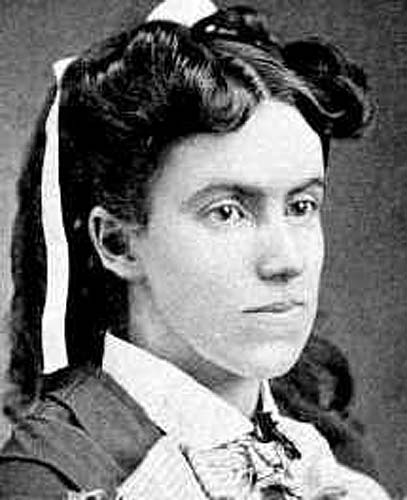
Who is this person called Lottie Moon and why is the annual Christmas offering named after her? See why Lottie lived a life of significance.
Thursday, December 9
December 9, 1986
Twenty-four years ago today, Linda and I were appointed by the Foreign Mission Board, SBC (IMB-SBC) as missionaries to Ecuador.
I can still remember how stressed I was that entire day because the bulletin listed us as going to Ecuador as Mass Media Specialists. I had insisted throughout the appointment process that we be appointed as Music/Mass Media missionaries. I can't help but smile, that 24 years later, we are still dealing with title issues and roles. I never have quite accepted any title or role assigned me yet!
One of the things I have come to realize during the past few months, is the high cost--the sacrifice--involved in obeying our calling to serve the Lord as cross-cultural missionaries. For most of my life I have had the attitude of tossing aside any semblance that we are "sacrificing" anything for Jesus. I guess we have always seen our own condition as far more blessed than the vast majority of people we relate to on the mission field. We have been given so much. What are we sacrificing? Are we really out there "suffering for Jesus?" God has provided for our every need. He has always been faithful.
And yet, following God's call on our life as overseas missionaries has been costly on us as a family. We have given up much. Each member of our family has had to pay a real price. I don't know if things would have been better or worse living this time in the USA, but I do know it has been costly to us as a family emotionally, spiritually, physically. In a real sense we bear real "scars" of our choice to follow Jesus like we have.
I have often thought about Jesus response to Peters words in Luke 18,
I guess it is only human to wonder, "what might have been" had we chosen NOT to heed God's call and taken this step 24 years ago? When we see the lifestyles of our friends and peers, we can't help but wonder what kind of life we too might have lived had we chosen differently.
Don't get me wrong, we aren't regretting for a moment our choice. I can't imagine our lives any differently! I wouldn't trade what we have lived and experienced these past 24 years with anybody on earth! But anniversaries are a time to reflect on God's goodness and faithfulness. I don't believe He is quite finished with us yet. And I can't help but believe the best days are yet ahead!
Some of the questions going around in my head these days are:
Before William Carey, the "Father of the Modern Missionary Movement" went to India, he said to the little society of believers sending him, "I will go down the mine, if you will all hold the ropes for me."
Will you continue to hold the ropes for us?


Click on the above images to zoom and see better the program and people we were appointed with.
I can still remember how stressed I was that entire day because the bulletin listed us as going to Ecuador as Mass Media Specialists. I had insisted throughout the appointment process that we be appointed as Music/Mass Media missionaries. I can't help but smile, that 24 years later, we are still dealing with title issues and roles. I never have quite accepted any title or role assigned me yet!
One of the things I have come to realize during the past few months, is the high cost--the sacrifice--involved in obeying our calling to serve the Lord as cross-cultural missionaries. For most of my life I have had the attitude of tossing aside any semblance that we are "sacrificing" anything for Jesus. I guess we have always seen our own condition as far more blessed than the vast majority of people we relate to on the mission field. We have been given so much. What are we sacrificing? Are we really out there "suffering for Jesus?" God has provided for our every need. He has always been faithful.
And yet, following God's call on our life as overseas missionaries has been costly on us as a family. We have given up much. Each member of our family has had to pay a real price. I don't know if things would have been better or worse living this time in the USA, but I do know it has been costly to us as a family emotionally, spiritually, physically. In a real sense we bear real "scars" of our choice to follow Jesus like we have.
I have often thought about Jesus response to Peters words in Luke 18,
"Behold, we have left our own homes and followed You." And He [JESUS] said... "Truly I say to you, there is no one who has left house or wife or brothers or parents or children, for the sake of the kingdom of God, who will not receive many times as much at this time and in the age to come, eternal life."These words were the text of the message preached by Keith Parks at our appointment service as missionaries 24 years ago today. I have always focused on the last part that promises we will receive "many times as much" for the little we might have sacrificed. But there is no skipping over the high cost entailed in leaving behind those things and people in order to fulfill one's calling. There is a price to be paid. It isn't easy.
I guess it is only human to wonder, "what might have been" had we chosen NOT to heed God's call and taken this step 24 years ago? When we see the lifestyles of our friends and peers, we can't help but wonder what kind of life we too might have lived had we chosen differently.
Don't get me wrong, we aren't regretting for a moment our choice. I can't imagine our lives any differently! I wouldn't trade what we have lived and experienced these past 24 years with anybody on earth! But anniversaries are a time to reflect on God's goodness and faithfulness. I don't believe He is quite finished with us yet. And I can't help but believe the best days are yet ahead!
Some of the questions going around in my head these days are:
- has it been worth it?
- are we really making a difference overseas?
- have we really made any kind of lasting, significant contribution?
- is it time to move on and do something else?
- is the work better or worse off for our being there?
- have we been faithful?
- is it time to return to the USA?
- does God have more for us to do here before relieving us of this responsibility?
- how do we balance of obeying God's call with the needs of our children and aging parents?
Before William Carey, the "Father of the Modern Missionary Movement" went to India, he said to the little society of believers sending him, "I will go down the mine, if you will all hold the ropes for me."
Will you continue to hold the ropes for us?


Click on the above images to zoom and see better the program and people we were appointed with.
Subscribe to:
Comments (Atom)