Sunday, December 3

Conversational prayer

Over the years of working with house/simple churches one of the most meaningful parts of our times together are the prayer times. We train church planters to practice several different ways of praying. One of these ways is conversational prayer.

Recently John White sent the following from Gail Graves (gailgraves@msn.com) on conversational prayer:

"...it is my belief that intimacy through conversational prayer is an area that virtually all simple churches need to consider. The molding of hearts together in Christ is tremendously facilitated as people learn to pray this way together. The results are astounding..."

Conversational Prayer:

Acknowledge God’s presence in the group. Praise and adoration is always good to help focus the group on communicating with the Lord.

Pray short prayers of one, two or three sentences.

Pray about one subject, idea or person at a time until everyone has shared as much and as often as prompted by the Spirit.

Be reluctant to change the subject as you would in any conversation until everyone is finished with it.

Times of silence can give the timid and the thoughtful time to contribute.

The more the conversation with God is passed around the group the deeper the intimacy grows. In time a small group becomes totally unified and purely transparent.

Watch God’s love flow freely, lives transform and answers to prayer abound.

Friday, December 1

Ideas for giving to the Lottie Moon Christmas Offering for international missions

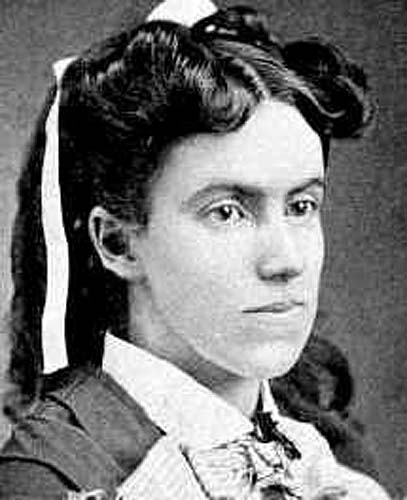
Every year Southern Baptist Churches in the United States collect a special offering in December for international missions. 100% of this offering goes for overseas work. The goal this year for the Lottie Moon Christmas Offering is $150 million.

Since we see first-hand and experience the impact of this offering, I would like to say THANK YOU for giving to the Lottie Moon Christmas Offering.

Do you know how much the average Southern Baptist gives to international missions per year? $8.35!!!

Here are a few suggestions that you might consider this Christmas Season as you determine what amount to give. Some of these ideas come from the IMB website here, but most are things we have tried ourselves over the years and personally practice as a family.

1) Decide what amount of money you will spend on your family this Christmas and give MORE than this amount to the LMCO. After all, it is Christ's birthday we are celebrating. Should we be getting more than He if it is his birthday?

2) Something we have done as a family for several years now is set aside an amount out of our monthly paycheck and have that amount automatically credited to the LMCO. This took a couple of email and phone calls to set up, but we haven't had to fool with it since, and are able to give to LMCO throughout the year.

3) A variation on the idea above would be to have a LMCO gift box that you deposit a set amount every week/month throughout the year. Then give this amount to your church when the offering is collected in December.

4) Sell tickets to a mother-daughter or father-son breakfast or brunch. Invite a missionary as a guest speaker. Proceeds go to Lottie Moon.

5) Auction students to church members for a day of service, from cleaning house to raking leaves. Money members give for the work youth do goes to Lottie Moon.

6) One thing we missionaries have done for many years is have an auction where a volunteer team brings in "goodies" from the States and auction them off to the missionaries. A six-pack of Dr. Pepper went for $120 one year! My son paid $60 for a box of Double-Bubble gum. I myself have paid $35 for a jar of Jiff peanut butter! All proceeds go to the missions offerings. Might your church do something similar?

7) Challenge folks to save money for the offering by giving up something small. Examples include a fast-food meal a week or a movie a month. Host a special ceremony for everyone to give their offering and share what God taught them through their sacrifice.

8) Double (or triple!) whatever you gave last year. Give sacrificially, not what is convenient.

9) As a church body, decide to channel funds to a lost world instead of to building improvements or beautification projects.

10) Take the "How Much Should I Give?" quiz.

Whatever you decide to give, please do so beforehand in prayer. The idea of just reaching in your pocket and giving whatever comes out doesn't seem worthy of the King of Kings and Lord of Lords. Give thoughtfully, prayerfully. There are few offerings that make as much of an eternal impact on the world as the Lottie Moon Christmas Offering. Do you feel a yearly offering of $8.35 is worthy of the One who left his throne in glory to die on a cross for our sins? How much will you give this year to see souls around the globe come to the Savior?
Checks can be mailed to (gifts are tax-deductable)
Lottie Moon Christmas Offering
International Mission Board, SBC
P.O. Box 6767
Richmond, VA 23230

Tuesday, November 28

Alternatives to monologue preaching

George Patterson & Galen Currah offer the following alternatives for monologue preaching in new works. I have found this article (reproduced in part here) to be quite helpful and practical in our own local work...
Why offer alternatives to monologue preaching from behind pulpits? After all, monologue is the only style that many Christians know. Few realize that the Word of God sets forth very different styles of teaching that have proven to be consistently more effective.

...The sermon, as a form of monologue, preached by paid specialists, has mostly replaced New Testament practices for teaching believers. Eloquent and persuasive preachers of monologue sermons have often swayed audiences and nations, and God has used His Word to win and edify many with such messages. However, where churches and cells reproduce in great numbers — as is the case in many lands today — few are able to preach well by monologue. Most who try to preach monologues communicate poorly, set an example that others cannot easily follow, and fail to make disciples.

Both the New Testament and church planting movements offer very effective alternatives to the monologue. As mentors of emerging leaders of new congregations, we should be able to train others in these alternatives.

Dialogue. (Acts 17:2; 20:7; 17:11; 24:25) The apostles preferred to “dialogue” with both seekers and believers, both individuals and groups. Dialogue, conversations with a purpose, allow a teacher to answer folk’s questions, allay their fears, inform their ignorance, appeal to their conscience, and help them choose what they will do. Believers are to teach and instruct “one another” (Col. 3:16; Rom 15:14). Dialogue is easier to do in small groups than in big congregations. Since most folks already know how to dialogue with their friends and relatives, doing so is a superior way to share about Jesus and the way of life that He calls everyone to follow.

Gifts of the Spirit. (1 Cor 12:7; 14:24-26) A primary task of those who shepherd flocks is to ensure that all the believers have time and opportunity to serve one another. In doing so, their gifts of the Spirit will “manifest” and many will be helped and strengthened. In fact, as all the believers share one with another, even unsaved folks who listen to them will see their own need and turn to Jesus. Gifts of the Spirit manifest more readily in small groups where believers see each other face-to-face and have freedom to speak one to another.

Demonstrations of power. (1 Cor 2:1-5; 1 Thes 1:4-6) The reality and truth of the Word of God are learned more from experience than by listening to logical discourses. One of the main tasks of those who shepherd flocks is to ensure that all the believers have time and opportunity to pray for one another, and to show love within their worship. As they do so, the Holy Spirit will work many miracles of healing and deliverance.

Drama and role play. Drama and story-telling remain universally appealing to all classes of society, and are a preferred leaning style in many of the more neglected societies. Men and women, young and old, can act out Bible stories that illustrate every major doctrine of Christianity. So doing also allows children to participate actively in worship. Brief role plays, presented with little preparation and without costumes, can prove both entertaining and evocative. A skit, followed by reading a Bible text, can open up discussion and help folks to apply truth to their lives and work. Furthermore, even the newest believers can participate.

Questions and answers. Folks have genuine questions and issues for which they seek help and answers. If we cannot answer a question, then let us admit so and promise to find answers.
If you would like to subscribe to MentorNet to receive these mailings regularly from Patterson/Currah, send an email to subscribe@mentornet.ws
They have recently begun a blog at http://mentornetblog.blogspot.com

Saturday, November 25

What can Stateside churches learn from their Ecuadorian counterparts?

In the 2005 Annual Church Profile (ACP), Baptist Press reports, "...compiled statistics for the Southern Baptist Convention show that baptisms...slumped again in 2005 from 387,947 to 371,850, or -4.15 percent."

Along this same theme, Thom Rainer in an article for the Florida Baptist Witness "The Dying American Church." states the following:
The facts of a 2004 research project I led are sobering. It takes 86 church members in America one year to reach a person for Christ...if the research is even close to accurate, the reality is that the church is not reproducing herself. In just one or two generations, Christianity could be so marginalized that it will be deemed irrelevant by most observers...
Compare this to the 3:1 baptism ratio as shared in one of my previous posts of the folks in the Guayaquil house churches. It takes three of them one year to baptize one new believer. While that is a far cry from our goal of every believer winning/discipling four per year, it sure beats an 86:1 ratio for churches in the States!

Baptisms are a key indicator to overall church health.

Why has the American church become evangelistically anemic? Thom of course gives several reasons in his article, but I would like to capitalize on just one of them, "Christians in churches often get caught up in the minor issues and fail to become passionate about the major issue of evangelism..."

I honestly believe most Stateside churches have more to learn from their Guayaquil brethren than the other way around!

What differences are there between our Ecuadorian national brethren and their Stateside counterparts? Why are the folks here so much more effective with their evangelism than Stateside Christians?

I can identify at least seven overlapping things I see house church believers consistently doing that are not usually seen in most Stateside churches:

1) Praying daily for the lost. Talk to the believers in a Guayaquil house church and they will show you their list of people they pray for daily of unsaved family, friends, and neighbors.

2) Active regular sharing of the Gospel. It is a very natural part of their Christian walk to share the Gospel with people they encounter in their daily lives. Christ has made such a difference in their lives, and they cannot help but share with those they come in contact with.

3) Planning regular evangelistic events. The house churches plan regular evangelistic events inviting those they are praying for to attend (concerts, outdoor street meetings, special programs, family conferences, DVD/Videos, invited guest speakers, neighborhood evangelistic door-to-door blitzes, etc.)

4) Visiting the sick and personally ministering to lost friends, neighbors and family in times of crisis. They are very good about visiting sick people outside of their church family, praying for healing and ministering to lost family and friends during difficult times.

5) Not distracted by a lot of outside issues like Thom Rainer mentions above. We too have our sticky issues, but they are more along the lines of things like can unmarried couples who get saved be baptized? How to counsel people with difficult problems? How to discern if someone is demon possessed or just emotionally unstable? How to handle questions that Roman Catholics always ask? Why doesn't God always heal someone when they are prayed for? If I were to share with them (and I don't) the issues that are causing all the uproar in the States these days, they would shake their heads in disbelief!

6) Intentionally focus on evangelism as a life priority. Talk to them and they will tell you that their ministry is to win/disciple at least four people to Christ this year. They expect God to give them these souls and are consciously praying and working to achieve this goal.

7) They maintain friendships/relationships with lost friends, neighbors, co-workers, etc. They play ball on the street with them, visit them in their homes, minister to them in times of need. How are we ever supposed to win people to the Lord if we have little/no relationship with the lost? How is a Christian supposed to win lost people if they do not even know any? Folks here know plenty of lost people whom they are burdened for their salvation.

Stateside churches may be doing a lot of neat things, have wonderful church programs, great worship services and solid Biblical preaching, but if they are not winning people to Christ, baptizing, making disciples, and teaching them to observe all that Jesus commanded, are they really a healthy N.T. church?

Tuesday, November 21

When is a church a church?

In a previous post "The church in your house" Bro. Tim Rogers asks a good question:

"The process of this type of church plant sounds interesting. When do you determine if it is a legitimate church?"

For us it is a fairly simple process. Church is not a complex institution. It is a living, growing organism. Therefore what we consider "church" is far simpler than what many think of when contemplating First Baptist Church, Bible Belt, USA.

There are basically three stages to becoming a church. All are undergirded by prayer.

1) engage in some type of evangelistic outreach to win people to Christ,
2) meet as an outreach group with these new converts until some are baptized,
3) become a church.

Before proceeding, just a word of clarification. We don't try to start churches with people who are already believers, or members of other existing churches. We only target non-believers and it is with new converts that we do all our church planting.

All that is needed to start a new church is a worker, a church planter, and a little bit of training. Therefore prayer to the Lord of the Harvest for laborers is high on our priority list.

Once we have a laborer (preferably a pair), we train them in much the same fashion as Jesus did with the 70 in Luke 10. We teach them to...
  • work in pairs (vs.1)
  • pray (v.2)
  • go (v.3)
  • don't take...(v.4)
  • find the person of peace (v.5,6)
  • stay in that house (v.7)
  • eat and drink with the POP (v.7,8)
  • heal (minister) (v.9)
  • proclaim. (v.9)
Once we have a group of people who have made professions of faith, the discipleship process continues but in group fashion. The group meeting can be anywhere from 2-3 people, to as many as fit inside the meeting place. They are called an "outreach group." Outreach groups will sing, pray, study the Word, minister to one another, even collect offerings, but they are not a church.

New believers in outreach groups are led to understand the security of their salvation experience. They are shown in Scripture that new believers are baptized.

This is the first real test whether or not they have truly given their hearts to Christ. If they back out or want to postpone baptism (for whatever reasons) we continue to work with them as an outreach group. For us the key that opens the door to becoming a church is baptism. Why?

Many Latin Americans with Roman Catholic backgrounds realize that being re-baptized is a clear break with the religion of their fathers. It is a major step. Much like it would be for Baptist readers deciding to make a break with their own church to join the Mormon church. Many times new believers are hesitant to take this step. Sometimes it takes several weeks, even months for them to come around to what we would consider a genuine decision of turning one's life over to Christ.

Once one or more people are baptized, they simply become a church. No need to make a big deal out of what already is. There are no other in between stages (mission, Bible study, preaching point.) Usually the same day as the initial baptisms we will also serve the Lord's Supper. From that point forward they are no longer considered an outreach group, but a church. They will, of course, continue the disicipleship process begun with their profession of faith. From the very beginning they are a self-supporting, self-governing, and self-propagating church. Church only becomes complicated when we begin adding extra-biblical requirements.

Just as a new born baby is a real human being, a group of new born babes in Christ is a real church. As long as they have someone to nurture, lead, and guide them (a church planter), and hopefully apostolic workers behind them for backup and encouragement, the new born church has a good chance to grow into a maturing body of believers. But as in real life, especially in the third world, many times new born babies die prematurely. The same thing is true for new churches. In our own case we have a high percentage of new church plants that die. Some of the reasons for this have been shared in an earlier post "Why do so many of our church plants fail?"

So therefore, a church is a group of baptized believers who meet regularly together where God has planted them and function as a NT ekklesia.

There is more to it than we have been able to briefly describe here, but this is essentially how we define "church." Any questions, clarifications, observations, etc. are welcome.

Saturday, November 18

What is one of the most aggravating things about being a missionary?

Well there are several things that aggravate me about being a missionary, but surely one of the most frustrating is the often lack of response we get from the people God has given us to work with.

How often we will...
  • organize events,
  • call people,
  • set up meetings,
  • leave messages,
  • send emails,
  • pray about a matter,
  • count on people for something,
  • plan a training event...
only to end up waiting for people to respond who never do? It is such a disappointment, and let down!

Jon Dale linked to an article by Michael Hyatt on the Secret of Success. While coming from a secular viewpoint, this is nevertheless a great article on the importance of being responsive.
What's the secret to your success? As a CEO, I get asked this a lot. And, I'm always a little embarrassed by it...I received an email from one of my readers. He [asked]... If you had to boil it down to one thing, Mr. Hyatt, what would you recommend to a young, aspiring person such as myself?"

I'm not sure I could boil it down to one thing. Life isn't usually that simple. But if I really, really had to boil it down to one thing, I would say this: responsiveness.

So many people I meet are unresponsive. They don't return their phone calls promptly. They don't answer their emails quickly. They don't complete their assignments on time. They promise to do something and never follow through. They have to be reminded, prodded, and nagged. This behavior creates work for everyone else and eats into their own productivity. Sadly, they seem oblivious to it... [read the rest of the article here.]
I wonder how God feels at our unresponsiveness to Him? How He feels when we don't bother to spend time with him? When His Spirit impresses us with something and we shrug it off and go on our way? Our lack of immediate, radical response to Him surely is a source of "holy frustration" with us, His unresponsive children.

God, make us responsive to Thee, and to those around us you bring into our lives.

Wednesday, November 15

The church in your house


Our "simple" church planting here in Guayaquil is known as "La Iglesia En Tu Casa" (LIETC)--The church in your house.

We have identified at least 13 guiding values that the Lord has seemingly been pleased to bless over the past 6+ years of church planting.

1.) LIETC is built upon a foundation of prayer, which is the most important work in which we are engaged. (Luke 10:2)

2.) LIETC is built upon the idea of "mobilizing the laity." The laity is empowered to go and do tasks traditionally assigned only to trained professional clergy. (Eph.4:11-12, 1 Pet.2:9-10)

3.) LIETC is built upon the concept of taking the church to where the people are, rather than bringing the people to the church. (Matt.28:18-20, Luke 10:3)

4.) LIETC crosses denominational lines and works with Great Commission Christians to plant New Testament churches. (Eph.4:4-6)

5.) LIETC depends on God to provide the workers, free of recruitment or manipulation. Prayer is the key. (Luke 10:2)

6.) LIETC is built upon the understanding that women are likewise called to plant churches. (Matthew 28:18-20)

7.) LIETC is built upon the understanding that it is Christ's responsibility to build His church, not ours (Mt. 16:18). Our task is the Great Commission--to make disciples; his to build His Church.

8.) LIETC is built upon an understanding that the missionary task is primarily one of praying, modeling, teaching, training, encouraging and mentoring. (Eph.4:11-12)

9.) LIETC is built upon the strategic use of locally available and reproducible communication media. We don't use or model anything that can't be done/reproduced locally by the people we work with.

10.) LIETC is built upon the idea of church being more a "family gathering" held in a home setting, and less a "traditional church service." (1 Cor. 12-14, 14:26, Book of Acts)

11.) LIETC is built on the twin pillars of prayer and lifestyle evangelism. There is a continuous emphasis on these two areas.

12.) LIETC is built upon the understanding that multiplication of disciples is the focus of all we do. Simply adding to existing works will not get the job done. (Matthew-Luke, the "parables of the kingdom.")

13.) LIETC belongs to God, and He can do as He pleases. Change in the way things are done is an on-going process as God continues to open our eyes to his ways of building the Kingdom.

Sunday, November 12

Abundant gospel sowing

One of the 10 universal elements found in all church planting movements around the world is abundant gospel sowing. This is not to be confused with evangelism. Ken Sorrell posts a good article on his blog about this difference. Suffice it to say, abundant gospel sowing (or gospel saturation) is a key element in moving us towards a church planting movement.

Here in Ecuador missionaries have employed many media over the years in the attempt to touch as many people with the Gospel as possible at an affordable cost. Some of the means used to abundantly sow the gospel include: radio, TV, literature distribution (tracts), films, parades, and many other ways with varying degrees of success.

For us, though, we have had the greatest success over the years with a prayer and telephone counseling ministry known as Teleamigo. I have previously posted on Teleamigo here (YouTube video), and here (ModernDay 'Five Loaves and Two Fish' story).

Not only is Teleamigo an inexpensive and cost effective way of reaching people, it is an EFFECTIVE way that has worked well for us over the years. I once calculated the cost per contact at $0.038/each. It has cost us less than four pennies to contact each of the 2.5-million Teleamigo contacts with the Gospel message!

Teleamigo functions as a wonderful "door-opener" for the Gospel by caring and listening to people and their problems. Spiritual issues almost always come to the forefront and we have an opportunity to share Christ and how he can make a difference in their lives. While there are certainly people who accept Christ directly through Teleamigo, our greatest result has been to draw men and women closer to a decision for Christ. After contacting Teleamigo, they are one step closer to making a decision for Christ. That to me is the definition of an effective "abundant gospel sowing" ministry. When our message holds people's attention and causes them to reflect and consider the implications of that message, that is effective AGS!

Without AGS leading the way (as John the Baptist did before the coming of Christ) there is often heavy resistance to the Gospel message. People do not see the relationship between their lives and the need of a Savior. They are usually content with their "own religion" and not interested in changing religions. This is where AGS comes in. It works like fertilizer in rough ground to prepare the heart soil for the seed which is to follow.

Enough talk about Teleamigo. Here is another short video done by the IMB several years ago produced for children's missions education in churches back Stateside, but still applicable and informative to show how abundant gospel sowing really works.